Seven Thousand One Hundred Islands… continuation
In the kare-kare post, I promised you a part 2. This is it.
Inihaw na liempo holds a different place in my heart. It is more than a smoky grilled treat. It carries layers of memory, each tied to a different chapter of my life.
The family Sunday lunches, liempo cooking on the back grill at home, the whole house filling with that smell. You knew it had to be Liempo. The little carinderia behind our high school in Malate, where 2 rice and free soup was a staple with this grilled delight. And my early working days in Makati, heading to Sosing’s once the paycheck cleared, when liempo, a side of gulay and rice, plus the extra rice, was suddenly affordable and worth every peso.
Then the world changed. We lost a lot of people close to us during the COVID years, one of them was my eldest brother, and after that, liempo at home was never quite the same. The grill still works. What changed was the people around it.
So the last time I went home, it was a different kind of trip. Unlike my previous pre-pandemic visits, when everything was still where I left it. This time I was walking through Manila to see what the pandemic had left behind. Looking for the familiar. And slowly realising how much of it was gone.
Of all the places we used to go, one still stood. Still felt the same. That was Sosing’s.
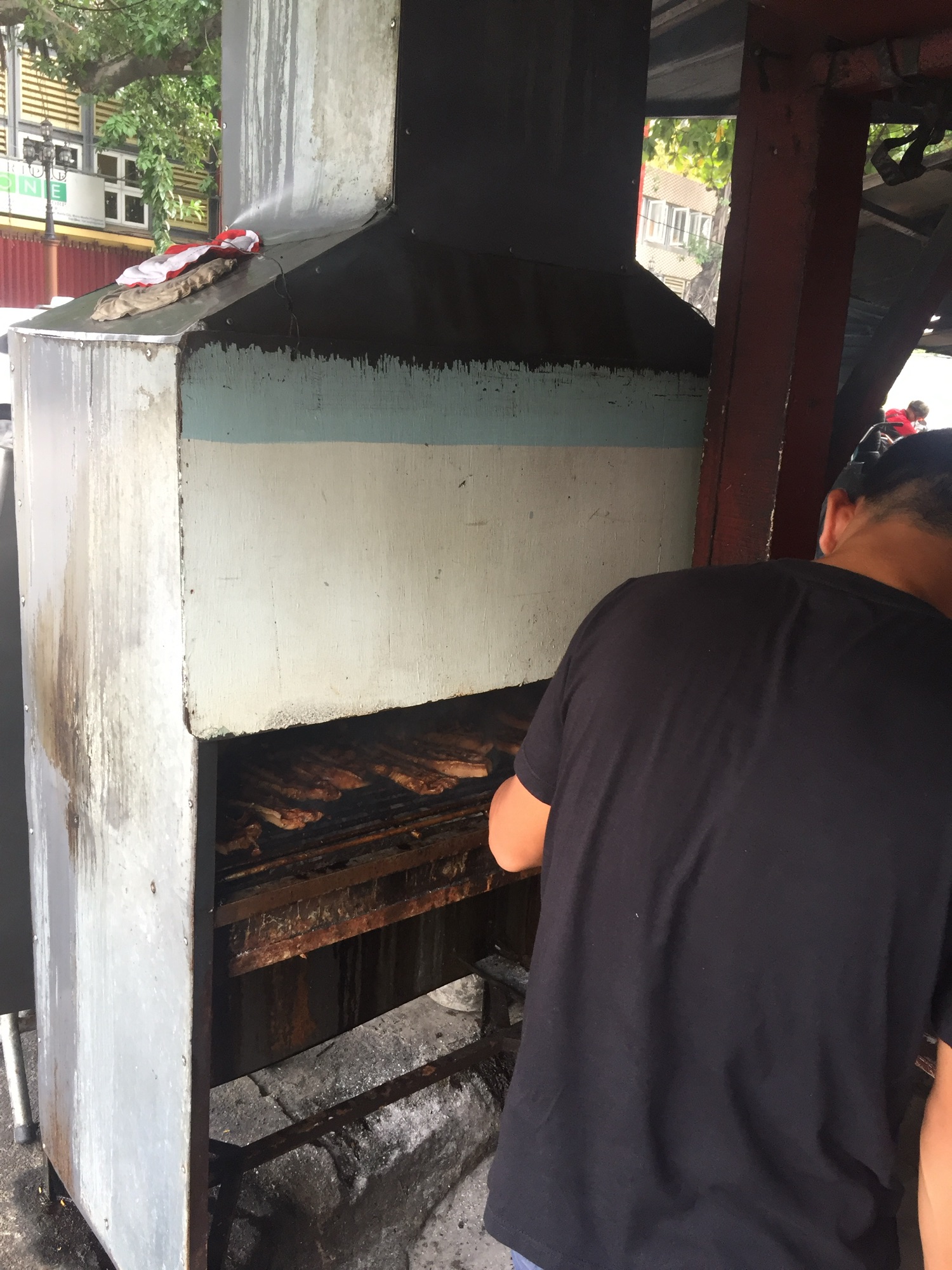
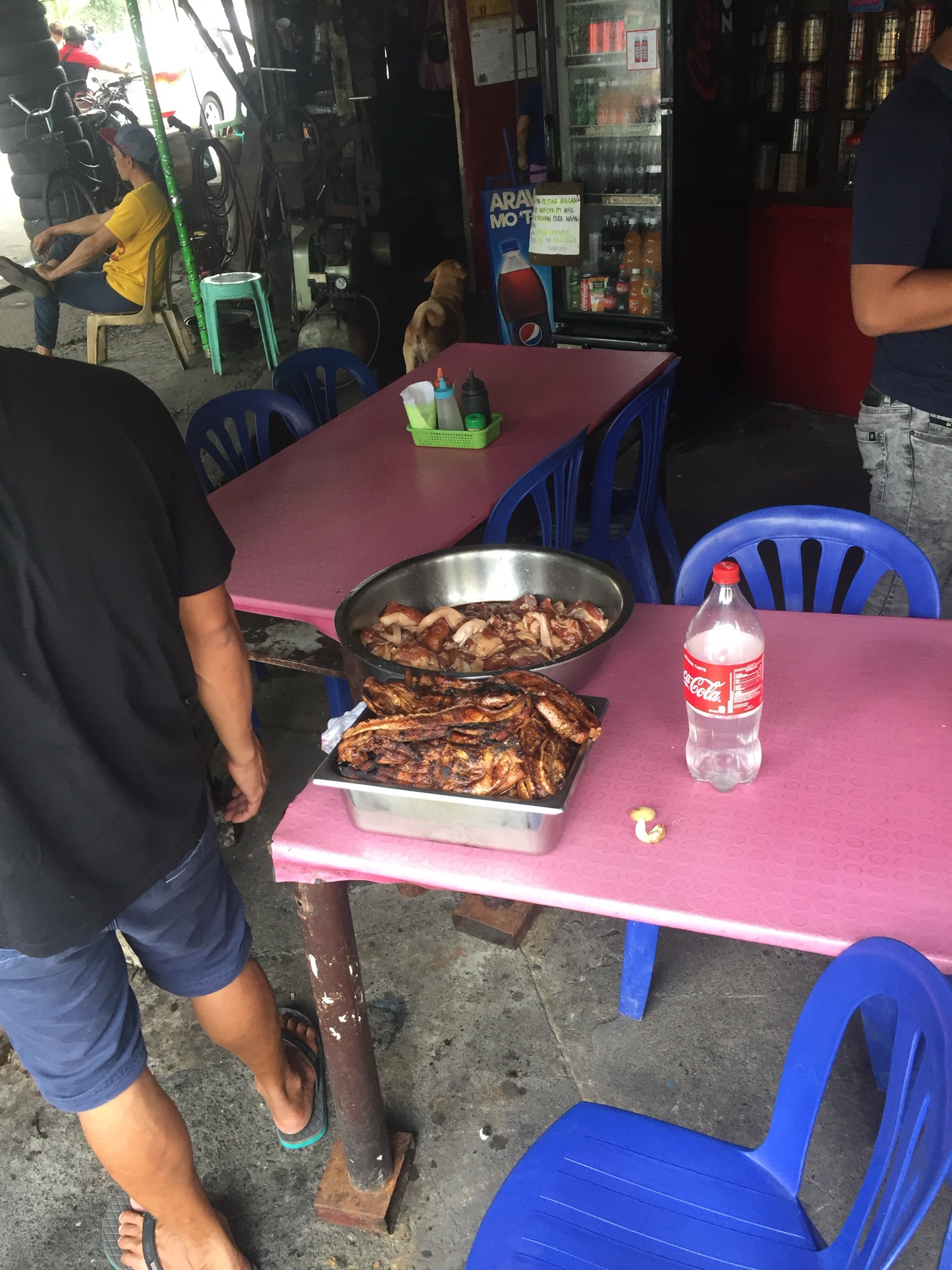
Same grill box, same low hum of charcoal, same liempo laid out over the coals. Whatever else had changed, this had not.
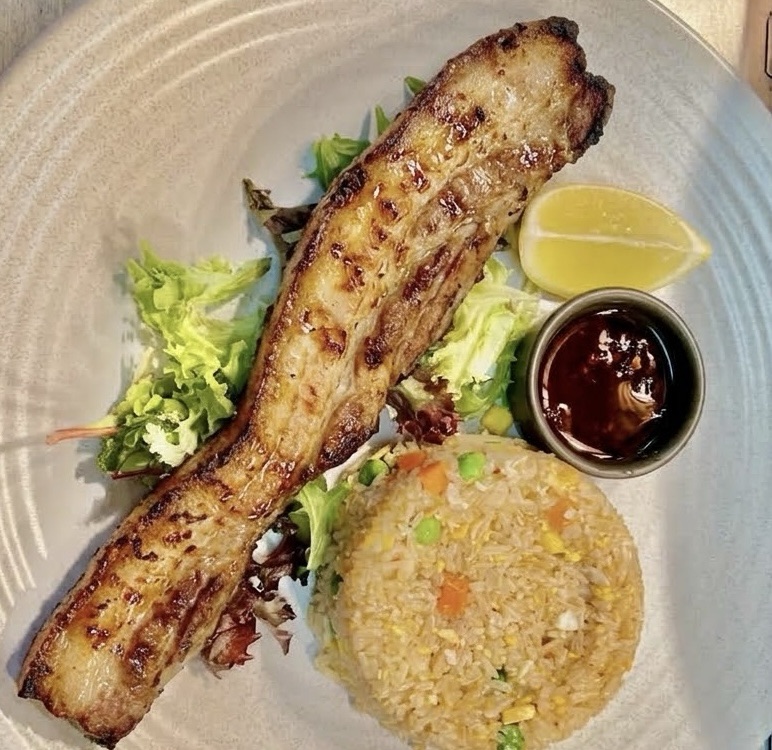
The Recreation, Here in Melbourne
I miss high school lunch breaks, I miss Sundays with all the family. I miss waiting for a table because we arrived late at Sosing’s. I could not bring a lot of things that I miss back, but the liempo I can recreate in my own backyard, light my own charcoal, and let the smoke carry all of it. The marinade, the char, the smell drifting through the yard. Every layer of memory, cooked into one plate.
Inihaw na Liempo
1 kg pork belly, boneless, rind on
1 head garlic, minced
1 knob ginger, minced
2 stalks lemongrass, pounded and minced
15 g salt
15 g cracked black pepper
15 g MSG
60 g raw sugar
200 ml white vinegar
60 ml calamansi juice
100 ml light soy sauce
For the kanto glaze
60 ml annatto oil
50 g garlic, minced
15 g cracked black pepper
240 ml ketchup (banana ketchup if you can get it)
80 ml light soy sauce
140 g raw sugar
To serve
Fried rice, spiced vinegar with toyo, and lime/lemon wedges (calamansi, or lime/lemon if you are in Australia)
Step 1 — Slice the pork belly lengthways into 1 cm thick strips.
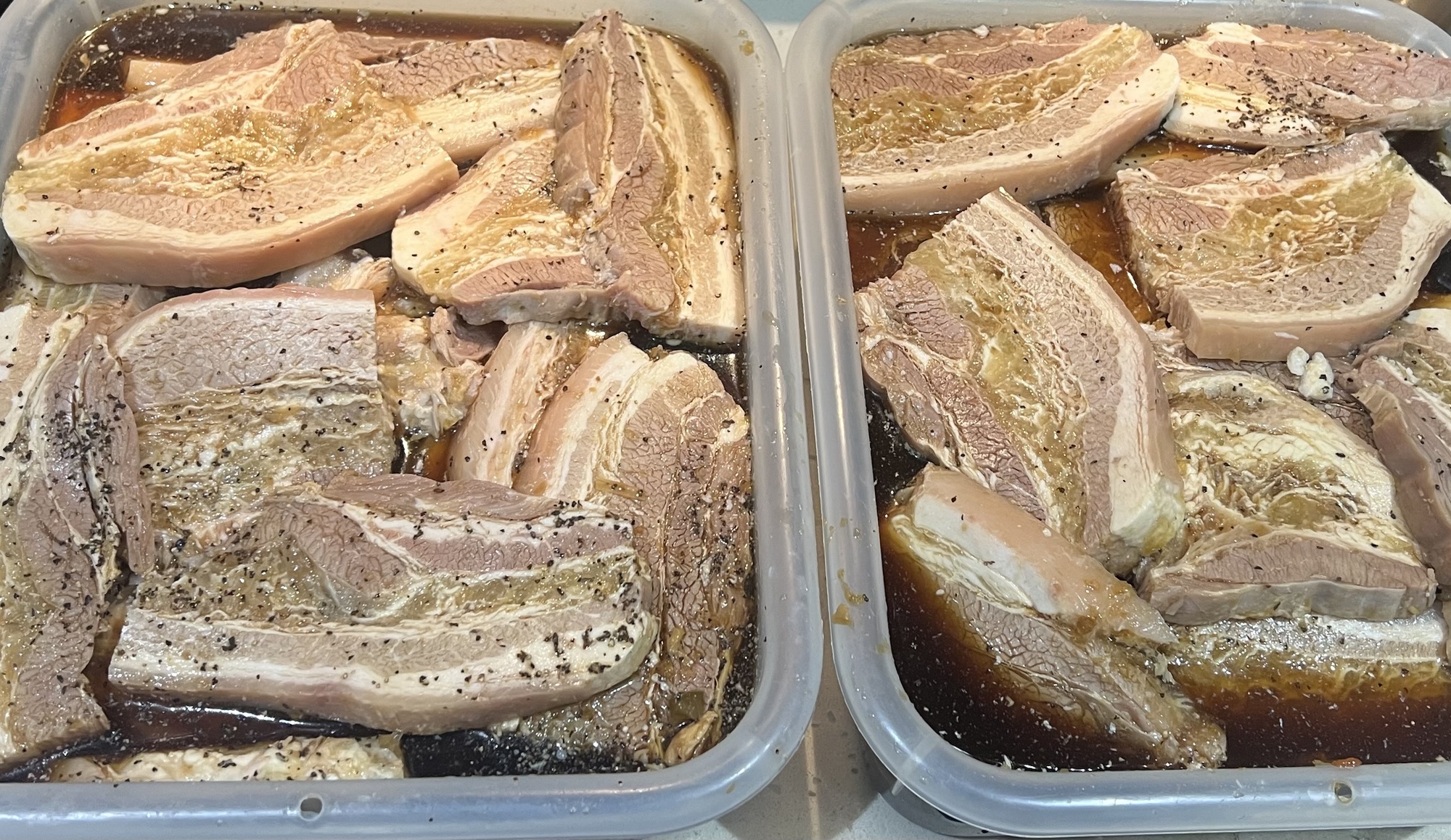
Step 2 — Combine the garlic, ginger, lemongrass, salt, pepper, MSG, sugar, vinegar, calamansi juice and soy sauce. Add the pork and mix well. Cover and soak in the fridge overnight.
Step 3 — While the coals are getting ready, make your kanto glaze by combining the annatto oil, garlic, cracked black pepper, ketchup, soy sauce and raw sugar.
Step 4 — Grill the pork over charcoal, turning regularly and basting with the glaze as you go, until the edges are charred and sticky and the pork is cooked through.
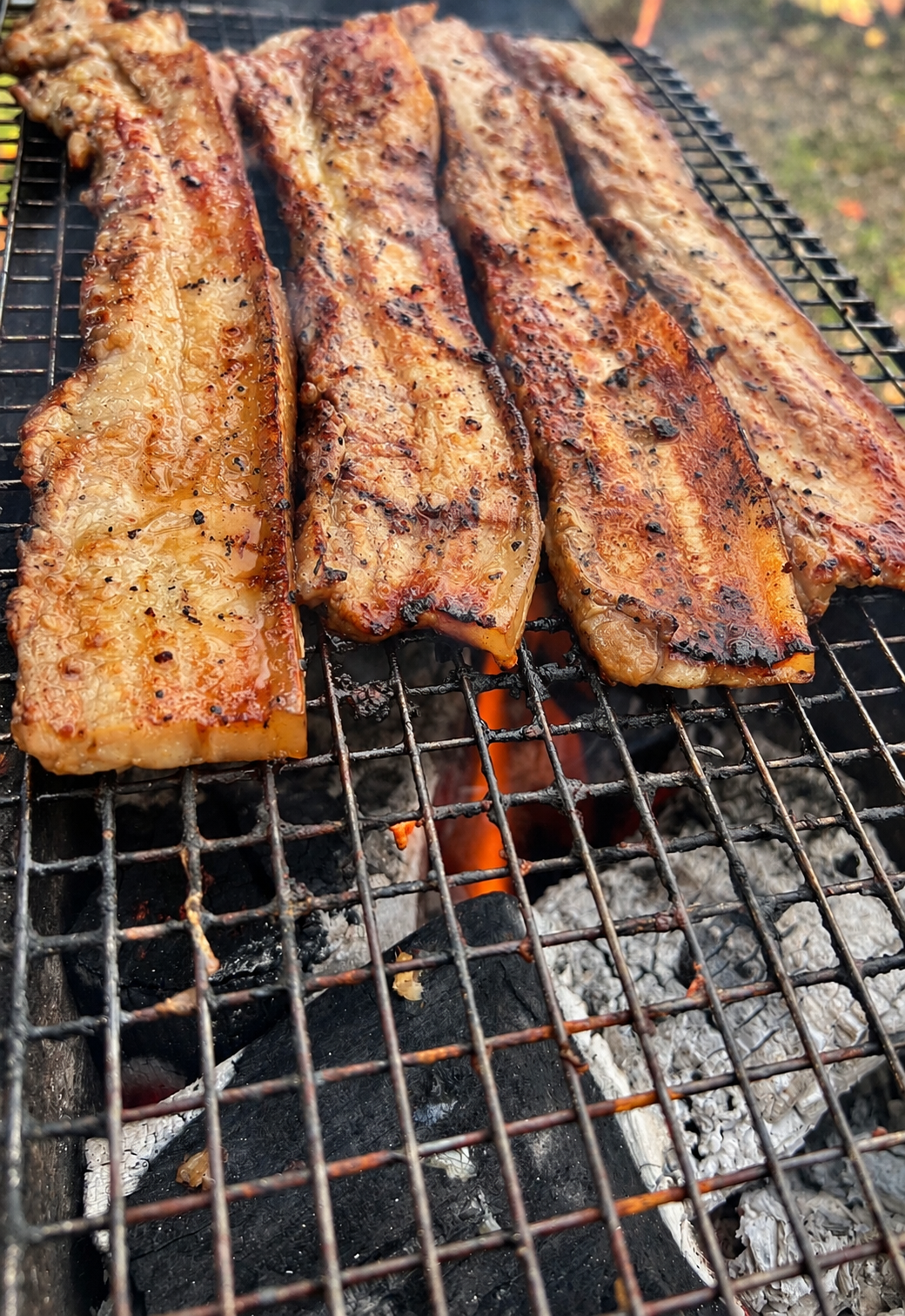
Step 5 — Rest briefly, then serve hot off the grill.
Chef’s Tip
Do not rush the char. Let the sugar in the glaze catch and darken at the edges before you flip. That sticky, slightly burnt edge is where the flavour lives.
Happy Cooking and always remember to cook with your Heart…
More from my Philippine food adventure when we continue…

