Mga Kwento sa Kusina… Stories from the Kitchen.
My dad was a sabungero.
For those who don’t know what that means — he was a cockfighting man. We spent a lot of time with him in the farm during school holidays. And every day without fail, he was up with the handlers before the sun. Tending to his roosters. Making sure they got the right mix of feeds, vitamins and water. Like a lanista getting his gladiators ready.
I’d go with him sometimes as a kid to the derbies. The sabungan was loud, chaotic, and completely alive. It wasn’t pretty. But it was his world, and I loved watching him in it.
Part of winning was always the bihag, the prize chicken forfeited by the losing side — and always on our way back to the farm he would be quiet. Not sad quiet. Proud quiet. The kind of quiet that says everything without saying a word. More than the prize money is that feeling that we won.
And as always the handlers would take care of the bihags.
And within the hour, the whole farm smelled of ginger and lemongrass.
That was Tinolang Manok. Our victory meal. No grand celebration, no big fuss. Just a pot on the stove, steam rising, and the smell of patis drifting through the whole farm.
It is one of the most comforting things I have ever eaten in my life. Clear golden broth, tender chicken that has been boiled for hours on firewood, the warmth of ginger — it tastes like victory.
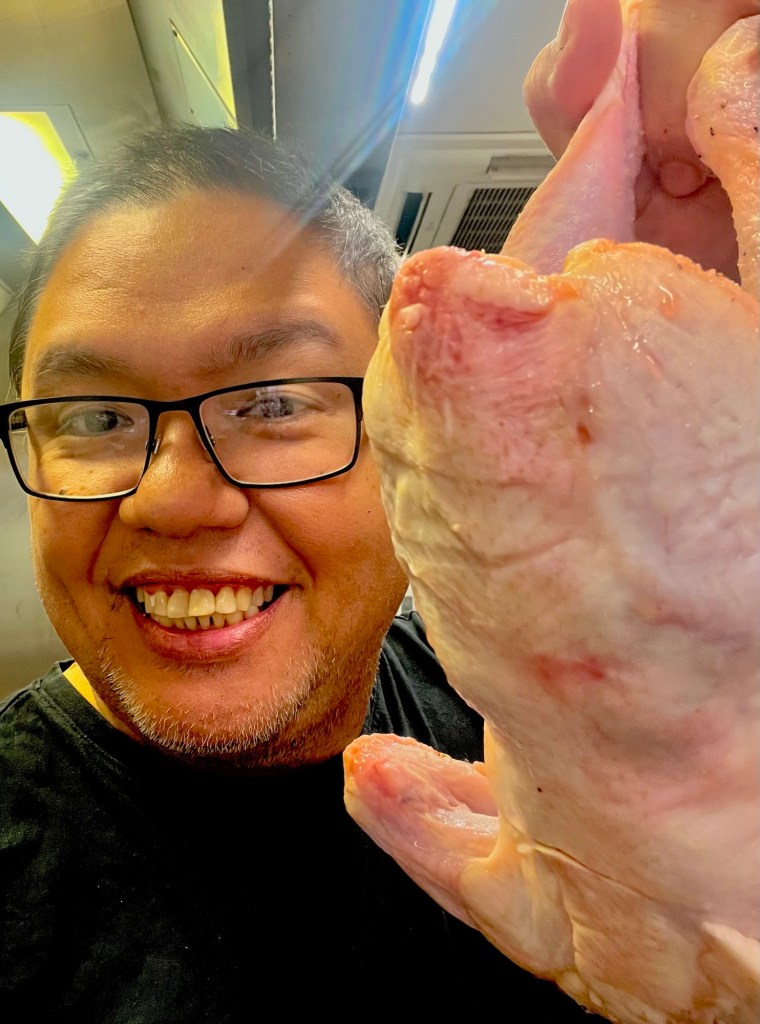
Back in Melbourne, during cold days I still cook Tinola, for the comfort, the warmth and the memories. But of course with normal chooks.
Tinolang Manok
Serves 4 to 6
1 whole #12 chicken, cut into serving pieces
2 stalks lemongrass, bruised
100 gms fresh ginger, peeled and sliced thick
6 cloves garlic, smashed
1 onion, quartered
4 laurel leaves
2 long green chillies (siling haba)
3 potatoes, quartered
50 ml patis
15 gms salt
5 gms cracked black pepper
120 ml vegetable oil
Spring onions and fresh spinach to finish
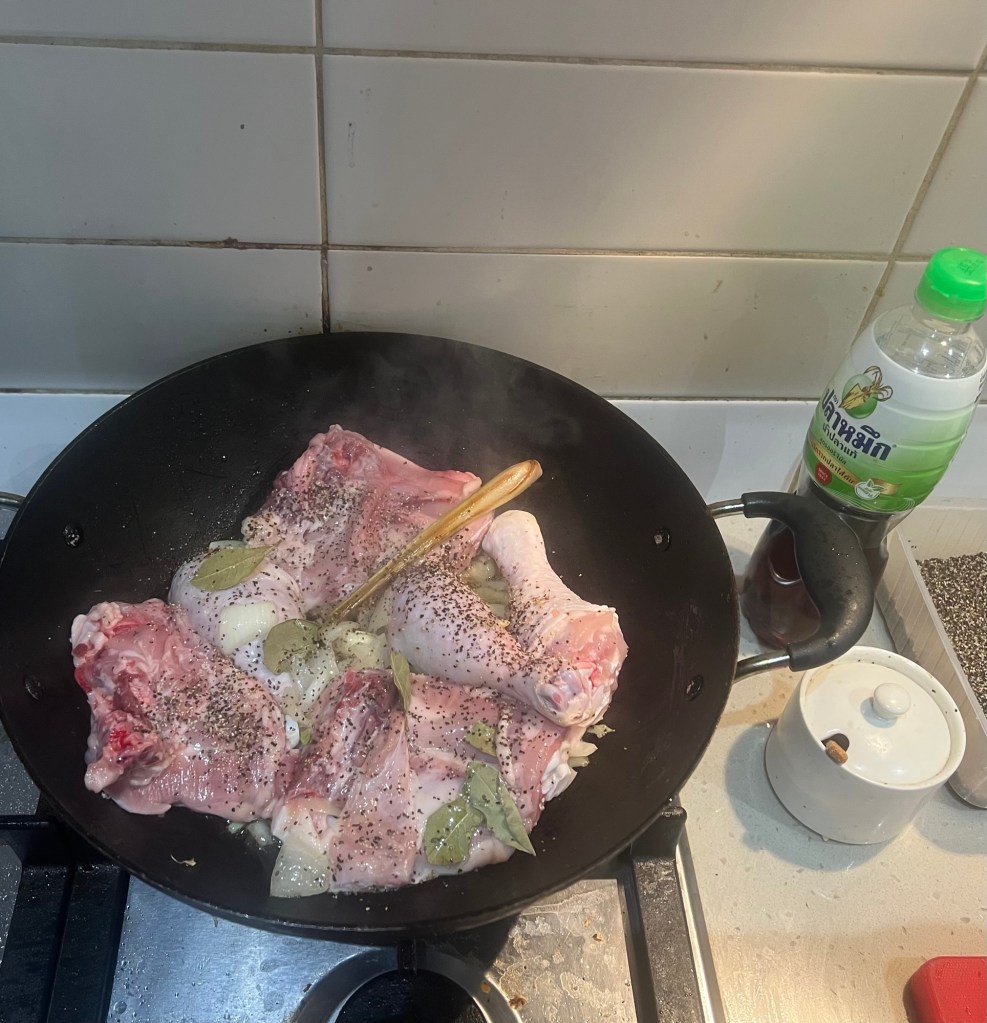
Step 1 — Heat the oil in a large pot over medium-high heat. Add the garlic and onion and sauté until softened, about 3 minutes.
Step 2 — Add the ginger and bruised lemongrass. Cook for another 2 minutes until the kitchen starts to smell incredible.
Step 3 — Add the chicken pieces and sear on all sides until lightly golden. Don’t rush this — colour means flavour.
Step 4 — Season with patis, salt, and cracked black pepper. Add the laurel leaves. Pour in enough water to just cover the chicken — around 1.5 to 2 litres. Bring to a boil then reduce to a steady simmer.
Step 5 — Add the whole green chillies and the potatoes. Simmer uncovered for 30 to 35 minutes, skimming any foam off the top, until the chicken is cooked through and the broth is clear and golden.
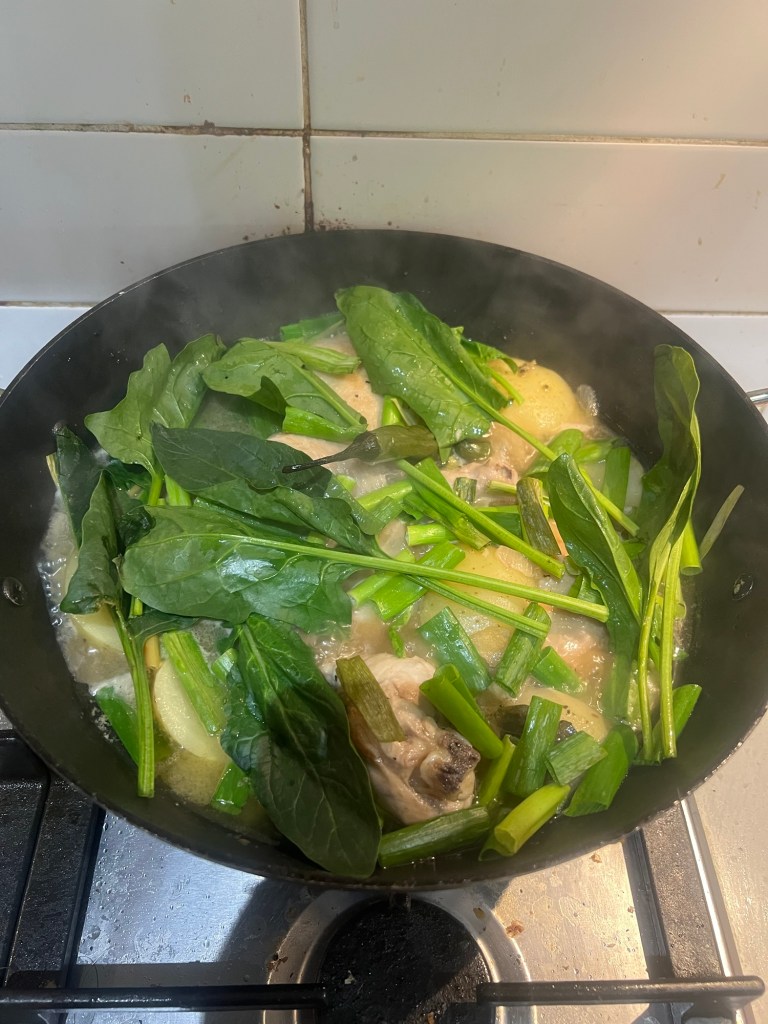
Step 6 — Taste and adjust your seasoning. Off the heat, stir in a generous handful of fresh spinach and let it wilt in the residual heat. Ladle into bowls, finish with spring onions, and serve with steamed white rice.
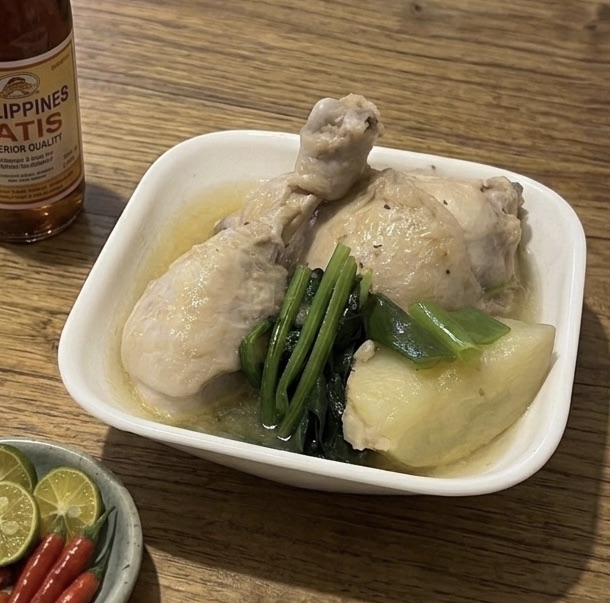
*If you can get a kampong or boiler chicken, use it. The flavour of the broth will be on another level entirely. And the patis is non-negotiable — it is the soul of this dish. Also if you find green papaya it is a lot better than potatoes.
Chef’s Tip
Add your leafy greens — spinach, malunggay, or pechay — only at the very end, off the heat. The residual warmth of the broth is enough to wilt them perfectly. Adding them while it is still boiling destroys their colour, their texture, and most of their nutrients. Thirty seconds off the heat is all they need.
Happy Cooking and always remember to cook with your Heart…
 Cooking with Migs